By Bill Carey
8 June 2025
This is the fourth in a series of articles explaining how imagery and promotion cultivate fear in the fire service. It is recommended to read the previous articles to understand the concepts.
How Did We Become Scared of the Roof? The Visual
The Picture Superiority Effect, Fear and Firefighters’ Perception of Risk
Emotional Anchoring Through Images: How Visuals Shape Perception and Risk in Firefighting
Emotional anchoring occurs when an emotionally charged image such as one evoking fear, sorrow, admiration or shock, becomes deeply associated with a specific event, behavior or role. The emotion and image become linked in memory, forming a powerful “anchor” that influences how we understand similar events in the future. This anchoring doesn’t just help us recall an event, it colors our judgment, perception of risk and even decision-making, often without us realizing it.
How It Plays Out in Online
In the fire service, emotional anchoring through images can have a powerful impact. A common example is how firefighters respond to photos and videos of firefighting posted on social media. These often feature emotionally charged images, such as firefighters operating on roofs or in contact with flames, accompanied by dramatic comments that are frequently irrational or factually inaccurate. While such comments may be intended to promote caution, offer criticism or align with popular sentiment, they can unintentionally distort perceptions of risk and misrepresent the data of line-of-duty deaths.
Misinterpretation of LODD Data
When a firefighter dies in the line of duty, especially in a highly reported and shared incident, a single image can become emotionally anchoring. For example, a photo showing firefighters on a roof may evoke intense fear and condemnation. That image, combined with emotional comments (e.g., “We should never be on the roof again,” or “This tactic kills firefighters”), can anchor the perception that the tactic itself is inherently dangerous.
However, this perception may not align with the actual, deeper, specific data. Information from various national fire service organizations, especially the United States Fire Administration (USFA), consistently shows that the most common causes of firefighter LODDs involve stress, medical issues or accidents unrelated to fireground tactics. Emotionally anchored images can make certain causes, such as structural collapse or flashover, seem more dangerous online simply because they are more visually dramatic and widely shared.
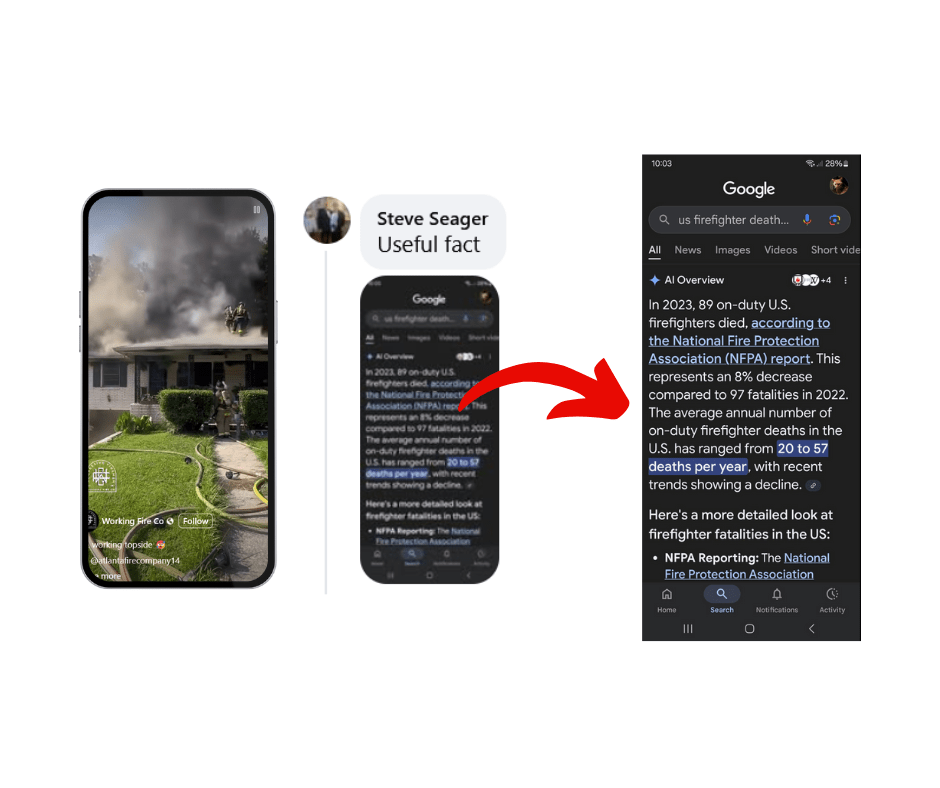
This disconnect creates a cognitive bias. Even when firefighter fatality data suggests a tactic is generally safe if properly executed, emotional anchoring can override that logic. Firefighters may instinctively avoid roof operations or interior searches—not based on policy or evidence, but because of the emotional impact of a single image and the narrative that grew around it. Take for instance this one comment, among many, about a video on the Working Fire Co Facebook page,
Why Comments Matter Too
Social media comments play a reinforcing role in emotional anchoring (see “herd mentality”). Reactions like “This should never happen again,” or “That tactic needs to be banned,” add weight to the image’s emotional charge. They create a communal echo chamber that strengthens the anchoring effect and discourages objective analysis. Over time, this can subtly shift culture, training focus, or even SOPs based more on emotional memory than on facts.
Comments, like the one above, can easily lead a firefighter with limited to no knowledge of firefighter fatality data to believe that many LODDs are due to vertical ventilation. It’s not that the commenter is being intentionally misleading, but rather that they too are ignorant of the details.
Understanding emotional anchoring is critical for firefighters, leaders, and trainers. It doesn’t mean ignoring emotional responses or refusing to honor the fallen. It means recognizing when emotion is steering perception, and taking deliberate steps to balance feeling with facts. Emotional images are powerful and they deserve respect, but also context.
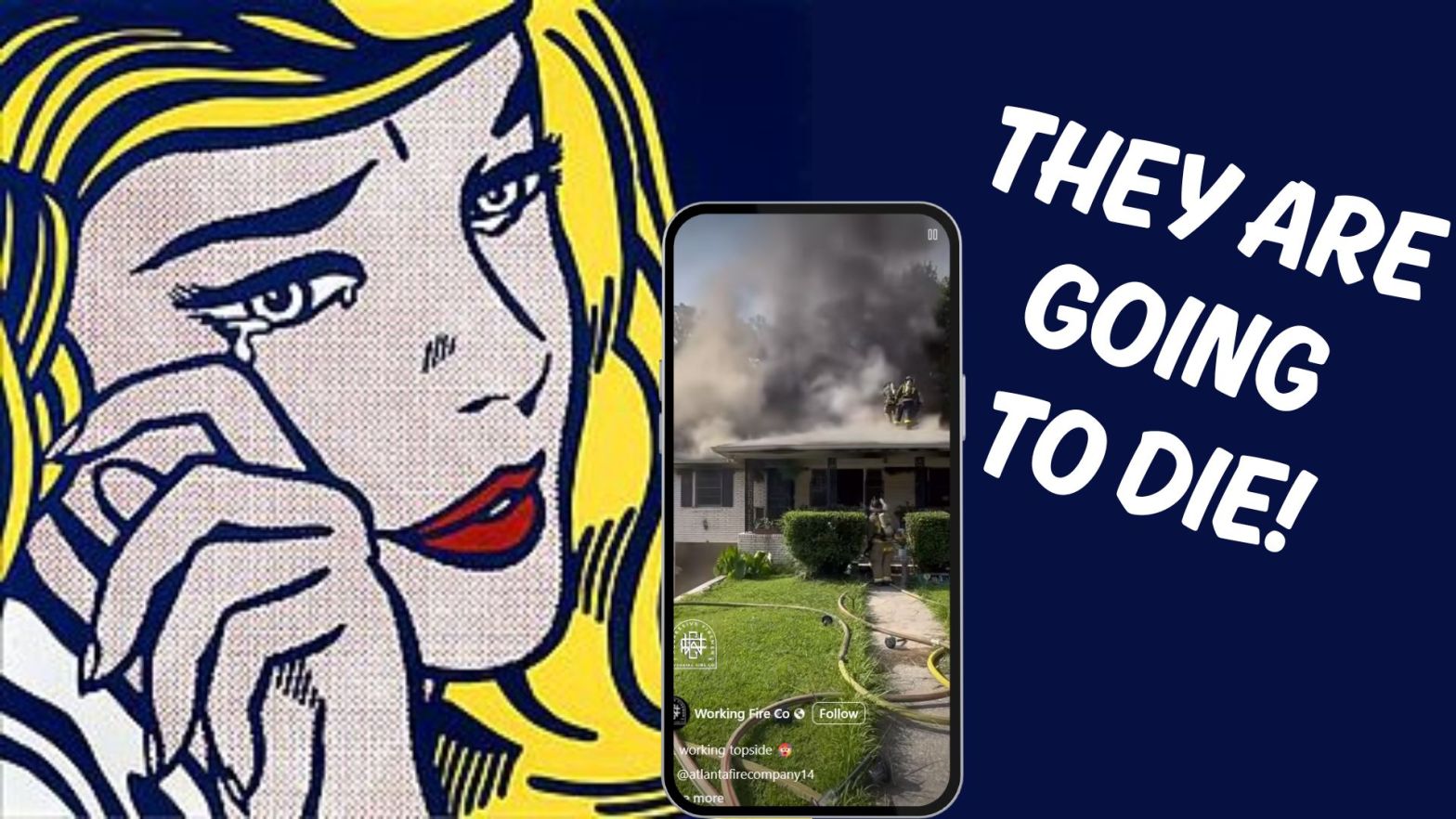
Lead image of “Crying Girl” by Roy Lichtenstein, and inset from Working Fire Company/Facebook.
 Data Not Drama
2 thoughts on “How Emotional Anchoring Shapes Online Risk Perception and Fireground Decisions”