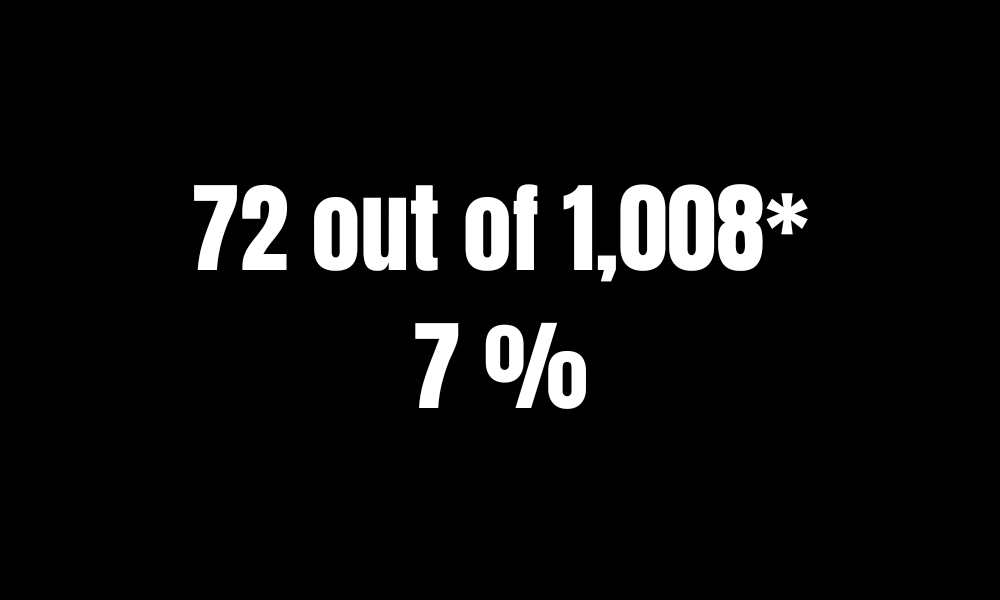
* Numbers are subject to change based on updates from the USFA.
By Bill Carey
4 January 2026
Introduction
Over the past decade, conversations within the fire service about line-of-duty deaths, especially those occurring during interior fireground operations, have increasingly migrated to social media platforms, where anecdote and emotion often overshadow empirical evidence. To inform a more evidence-based understanding, this article examines the Data-Not-Drama: Inside Numbers reports from 2015 through 2025, which parse national firefighter fatality data with a focus on traumatic interior fireground deaths (i.e., those occurring while advancing hoselines, searching for civilians or ventilating structures) and exclude non-traumatic medical events that dominate total firefighter deaths.
The goal is not to minimize loss but to clarify actual risk levels, dispel misinterpretations and support sound, factual presentations, trainings and discussions about fireground risks and LODDs, grounded in data rather than fear.
Data Sources, Definitions and Methodology
The Inside Numbers series is derived from public fatality data, primarily from the United States Fire Administration (USFA), supplemented by incident reports and investigation findings. A central analytic choice in these reports is the classification of “interior deaths,” deaths occurring due to trauma while performing structure fire operations, as opposed to all on-duty deaths (which include medical events, vehicle collisions, training accidents, etc.). The Data-Not-Drama methodology mirrors NIOSH definitions in separating traumatic from non-traumatic deaths and emphasizes context-specific operational categorization rather than lump-sum totals.
This approach allows firefighters and fire service leaders to isolate and examine the specific risks associated with interior fireground operations, rather than relying on aggregated fatality totals that obscure operational context. By disaggregating interior traumatic deaths from medical events, vehicle incidents, and non-fireground activities, the data provide a clearer and more accurate foundation for evaluating interior tactics, training priorities, and risk management decisions.
When viewed through the lens of NFPA 1500, Standard on Fire Department Occupational Safety, Health, and Wellness Program, this distinction directly supports the standard’s requirement for departments to implement risk management processes based on identified and evaluated hazards, rather than perceived or assumed dangers. Separating interior traumatic deaths from other fatality categories enables a more precise hazard analysis, ensuring that control measures are aligned with documented risk rather than anecdotal amplification.
Similarly, NFPA 1582, Standard on Comprehensive Occupational Medical Program for Fire Departments, is grounded in the recognition that cardiovascular events remain the leading cause of firefighter line-of-duty deaths. By clarifying that interior fireground trauma accounts for a relatively small proportion of overall fatalities, the data reinforce the necessity of sustained investment in medical screening, fitness, and health monitoring programs as primary life-saving interventions, rather than allowing interior operational fear to overshadow the most significant mortality risk.
NFPA 1583, Standard on Health-Related Fitness Programs for Fire Department Members, further aligns with this evidence-based perspective by emphasizing physical readiness as a core safety control. When interior operations are accurately contextualized within the broader fatality landscape, it becomes clear that improvements in cardiovascular fitness, fatigue management, and long-term health resilience offer greater potential for reducing firefighter deaths than reactionary restrictions on interior tactics driven by isolated incidents or social media narratives.
Taken together, the Inside Numbers methodology complements the intent of these NFPA standards by shifting the fire service conversation from fear-driven operational avoidance toward data-informed risk management and prevention strategies. This alignment allows departments to focus limited resources on the hazards most responsible for firefighter fatalities, while preserving the operational capability to conduct interior fire attack and search when conditions, training, and command judgment support that decision.
Annual Interior LODD Patterns (2015–2025)
2015–2017: Low Interior Fatality Counts
- 2015: 10 interior deaths were recorded, including two related to structural collapse outside the building.
- 2016: Six interior deaths
- 2017: Only one interior fireground fatality was recorded in the year’s 93 reported deaths.
These early years show that interior LODDs form a very small fraction of overall firefighter deaths.
2018–2021: Slightly Elevated, Stable Patterns
- 2018: 7 interior deaths
- 2019: 7 interior deaths
- 2020: 6 interior deaths
- 2021: 8 interior deaths
Even in years with higher totals, interior traumatic deaths remain a small number, underscoring that the primary risks in the fire service lie elsewhere.
2022–2025: Clarifying Recent Trends
- 2022: 9 interior deaths
- 2023: 10 interior deaths
- 2024: 4 interior deaths
- 2025: 4 interior deaths
These figures reinforce a decade-long pattern: interior traumatic deaths are relatively rare, while broader LODD counts are dominated by medical events and vehicle-related fatalities.
Key Findings and Misconceptions
1. Interior Operations Are Not the Leading Cause of Firefighter Deaths
Data from the Inside Numbers series (2015–2025) demonstrate that interior traumatic LODDs consistently account for a very small percentage of annual line-of-duty deaths. While dramatic cases often dominate discussion on social media, the statistical evidence indicates that interior operations are not the primary source of firefighter fatalities. This distinction is critical: policy decisions, training priorities and tactical directives should reflect greater risk rather than isolated incidents or high-visibility events.
By differentiating interior traumatic deaths from other on-duty fatalities, departments gain a precise understanding of operational hazards, enabling risk-based decision-making to be focused more on firefighter health than fireground operations. Overemphasis on interior operations without context risks misallocating training resources and unnecessarily restricting operational capabilities, potentially limiting the fire service’s effectiveness without significantly improving safety.
2. Non-Traumatic Events Dominate LODD Totals
The majority of firefighter fatalities are non-traumatic in nature, with cardiovascular events, vehicle collisions and training-related incidents consistently representing the largest share of line-of-duty deaths. NFPA 1582, which outlines the Comprehensive Occupational Medical Program, highlights that sudden cardiac events are the leading cause of firefighter mortality nationally. Apparatus and roadway incidents, as reported by USFA and NFPA, further underscore that operational and environmental hazards outside the fire building pose a greater threat than interior fireground trauma.
This data-driven perspective emphasizes that prevention strategies should prioritize high-frequency, high-impact hazards, including medical screening, physical fitness programs, vehicle safety and training protocols. Interior operations, while not risk-free, constitute a minor contributor to overall mortality and therefore should not dominate safety discussions or drive disproportionate fear.
3. Social Media Amplifies Perceived Risk
A growing body of research indicates that social media amplifies perceived risk through repeated exposure to emotionally salient events, which can create cognitive biases such as the availability heuristic and confirmation bias (Tversky & Kahneman, 1974; Slovic, 2000). Within the fire service, videos or anecdotal accounts of interior fireground deaths are frequently circulated, often accompanied by critical commentary that exaggerates danger or questions tactical decisions.
The Inside Numbers dataset provides a counterbalance to these narratives, revealing that the reality of interior traumatic LODDs is statistically modest and consistent over time. Departments that rely on objective data rather than social amplification can reduce fear-driven decision-making, maintain operational capability, and target interventions where they will have the greatest impact on survival and injury prevention. Integrating this evidence into training, SOPs and leadership communications is essential to foster a risk-aware but proportionate safety culture.
Implications for Training, Tactics, and Leadership
1. Evidence-Based Risk Assessment
Command and training officers are tasked with making operational decisions that balance firefighter safety with mission effectiveness. Utilizing disaggregated LODD data, such as that provided in the Inside Numbers series, enables leaders to assess risk objectively, distinguishing between statistically significant hazards and those that are overrepresented due to anecdotal reporting or social media amplification.
Evidence-based risk assessment aligns with NFPA 1500, which mandates that fire departments implement systematic hazard evaluation and ensure that operational decisions reflect actual, documented risks rather than assumptions or emotional reactions. By integrating accurate interior LODD statistics into tactical planning, officers can identify when interior operations are safe to conduct, establish thresholds for risk mitigation and implement strategies proportionate to actual danger levels. This prevents overreaction to isolated incidents and fosters a culture of informed risk management.
2. Resource Allocation
Accurate risk assessment informs strategic resource allocation, directing attention and investment to interventions that yield the greatest reduction in firefighter mortality. National data indicate that cardiovascular events, apparatus-related incidents and training accidents consistently account for the largest proportion of LODDs. Consequently, departments should prioritize:
- Health and wellness programs (physical fitness, medical screenings, and rehabilitation initiatives) consistent with NFPA 1582 and NFPA 1583, which emphasize medical readiness and health-related fitness as key safety controls.
- Apparatus and roadway safety through training, SOPs and adherence to national safety standards.
- Targeted training programs addressing the highest-frequency hazards within the environment a fire department operates frequently, rather than allocating disproportionate resources to low-incidence interior fireground fatalities.
By focusing interventions where they will have the most measurable impact, departments optimize firefighter safety and operational readiness, ensuring limited resources are applied effectively and efficiently.
3. SOP and Policy Alignment
Integrating data-driven insights into departmental SOPs enables the fire service to maintain interior operational capability without compromising safety. When interior operations are evaluated within the context of accurate LODD statistics, departments can:
- Maintain interior attack, search and ventilation procedures when conditions, staffing and firefighter competence support safe execution.
- Develop risk-based SOPs that incorporate thresholds for environmental conditions, resource availability and crew readiness.
- Focus on preventive measures for the most common causes of death, such as cardiovascular events and apparatus-related hazards, ensuring that SOPs reflect actual threats rather than perceived or sensationalized ones.
This evidence-based approach aligns with the intent of NFPA 1500, 1582, and 1583, promoting a safety culture grounded in data and operational realism, reducing fear-driven overcaution and enhancing the department’s capacity to perform interior operations safely and effectively.
4. Leadership and Cultural Implications
Beyond training and policy, these data inform organizational culture and leadership messaging. Officers and chiefs can leverage evidence to:
- Educate crews on actual versus perceived risk, mitigating the influence of social media amplification.
- Encourage critical thinking and professional judgment during interior operations, fostering decision-making that balances mission objectives with measurable safety considerations.
- Reinforce a proactive, data-informed safety culture in which fear does not drive operational choices, but evidence guides tactical and strategic decisions.
Conclusion: Evidence-Based Perspective on Interior Fireground Risk
Across a decade of Inside Numbers analyses (2015–2025), the data consistently demonstrate that interior traumatic line-of-duty deaths constitute a small proportion of overall firefighter fatalities. Even in years with relatively higher interior fatality counts, these incidents rarely exceed 10% of total LODDs, while the majority of deaths are attributable to cardiovascular events, apparatus incidents, and other non-fireground hazards.
This evidence directly challenges social media–driven narratives that portray interior operations as inherently and disproportionately deadly. Graphic imagery, emotionally charged commentary, and anecdotal accounts can distort risk perception, creating cognitive biases such as the availability heuristic, which overemphasizes dramatic but statistically rare events. In contrast, systematic data collection and critical evaluation reveal that essential fireground tasks—advancing hoselines, conducting searches, ventilating structures—are not the primary drivers of firefighter mortality when conducted under appropriate environmental conditions, with adequate staffing, and following established training protocols.
Embracing such data-driven analysis allows fire service professionals to:
- Combat misinformation and fear-based decision-making, particularly in contexts where social media amplifies perceived hazards beyond their statistical reality.
- Ground operational decisions in empirically documented risk, ensuring that tactics, SOPs, and command decisions are proportionate to actual danger rather than emotional reaction.
- Prioritize interventions with the greatest potential to reduce fatalities, including medical monitoring, fitness programs, apparatus and roadway safety, and risk-aware training initiatives.
- Enhance firefighter and civilian safety simultaneously, by maintaining operational capability where appropriate while focusing on hazards most likely to result in death or injury.
In sum, a critical, evidence-based perspective empowers the fire service to reconcile operational necessity with occupational safety, aligning departmental policies, training programs, and leadership guidance with realistic risk profiles rather than fear-driven perceptions. By systematically integrating these insights into decision-making frameworks, supported by NFPA 1standards, departments can foster a culture of informed risk management, operational proficiency and sustainable firefighter safety.
References
Fire Service Data and LODD Sources
- Data-Not-Drama. (2015–2025). Inside Numbers: Firefighter Line-of-Duty Death Analyses. Retrieved from https://data-not-drama.com/inside-numbers
- United States Fire Administration (USFA). (2023). Firefighter Fatalities in the United States. U.S. Department of Homeland Security. Retrieved from https://www.usfa.fema.gov/statistics/reports/firefighters-departments/firefighter-fatalities.html
NFPA Standards
- NFPA. (2021). NFPA 1582: Standard on Comprehensive Occupational Medical Program for Fire Departments. National Fire Protection Association.
- NFPA. (2022). NFPA 1500: Standard on Fire Department Occupational Safety, Health, and Wellness Program. National Fire Protection Association.
- NFPA. (2021). NFPA 1583: Standard on Health-Related Fitness Programs for Fire Department Members. National Fire Protection Association.
Risk Perception and Cognitive Bias
- Slovic, P. (2000). The Perception of Risk. London: Earthscan Publications.
- Tversky, A., & Kahneman, D. (1974). Judgment under Uncertainty: Heuristics and Biases. Science, 185(4157), 1124–1131.
Occupational Health and Safety Context
- Kales, S. N., Soteriades, E. S., Christophi, C. A., & Christiani, D. C. (2007). Emergency duties and deaths from heart disease among firefighters in the United States. New England Journal of Medicine, 356(12), 1207–1215.
- NFPA. (2023). Firefighter Fatality Reports and Analyses. National Fire Protection Association. Retrieved from https://www.nfpa.org/research
Social Media Influence and Decision-Making in High-Risk Professions
- Kahneman, D. (2011). Thinking, Fast and Slow. New York: Farrar, Straus and Giroux.
- Slovic, P., Finucane, M., Peters, E., & MacGregor, D. G. (2004). Risk as Analysis and Risk as Feelings: Some Thoughts About Affect, Reason, Risk, and Rationality. Risk Analysis, 24(2), 311–322.
 Data Not Drama
One thought on “10 Years of Interior LODD Data: A Critical, Data-Driven Perspective for the Fire Service”