By Bill Carey
25 July 2025
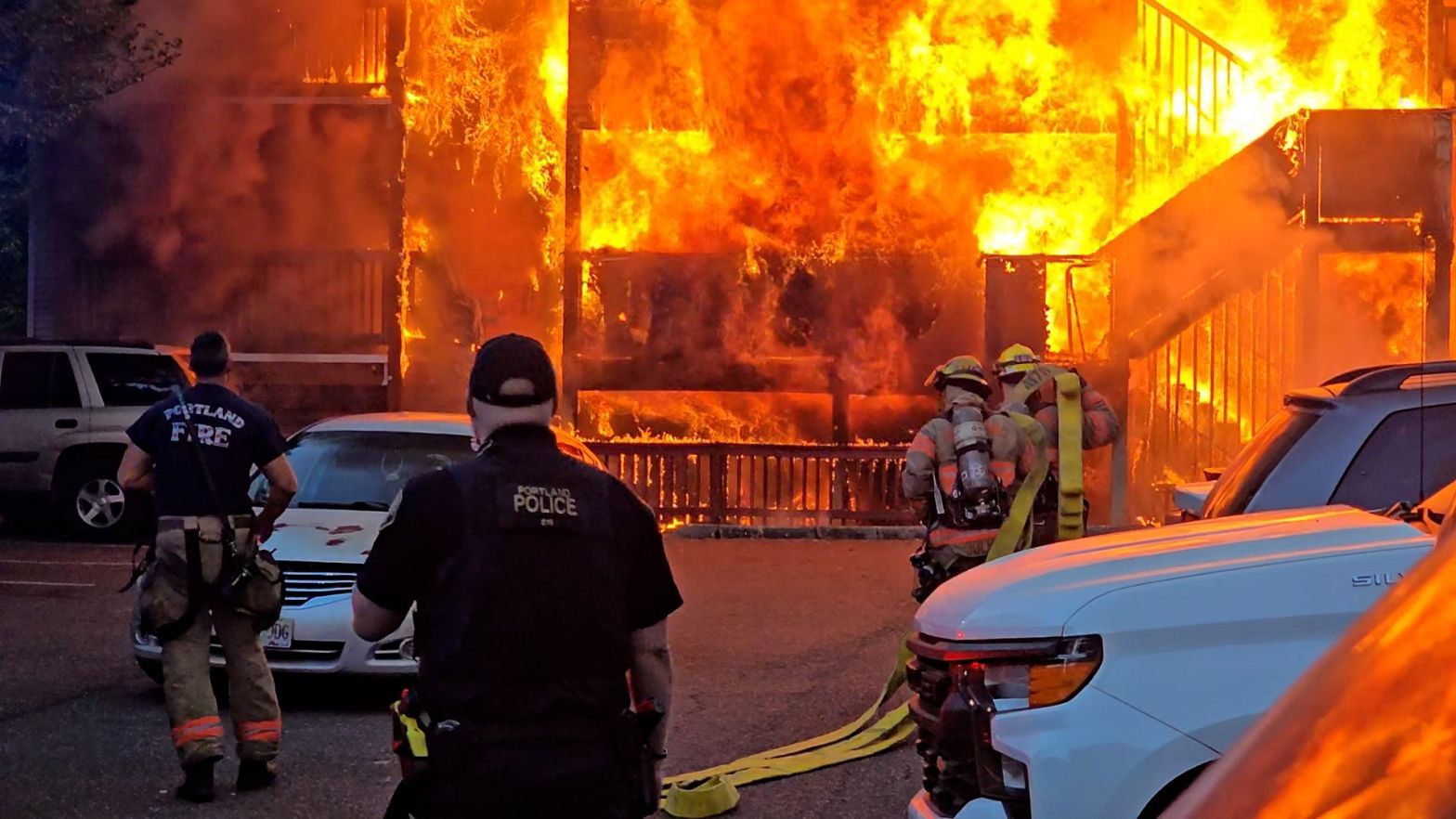
Victim Survivability Profiling (VSP) was purported to help assess whether trapped occupants are likely to survive a fire, combining factors like smoke, fire location, time and construction. Supporters claim it balances civilian and firefighter safety. But when used as justification for not entering a building, VSP can devolve into trading civilian lives for perceived safety based on assumptions, not evidence.
Firefighter safety matters, but we must examine: Does VSP foster overcautious, life‑limiting decisions? Or does it guide them? When we analyze actual firefighter line‑of‑duty deaths (LODDs), the data, especially from us, shows interior operations account for a small fraction of deaths, while civilians frequently survive in conditions VSP would likely dismiss.
What Is Victim Survivability Profiling?
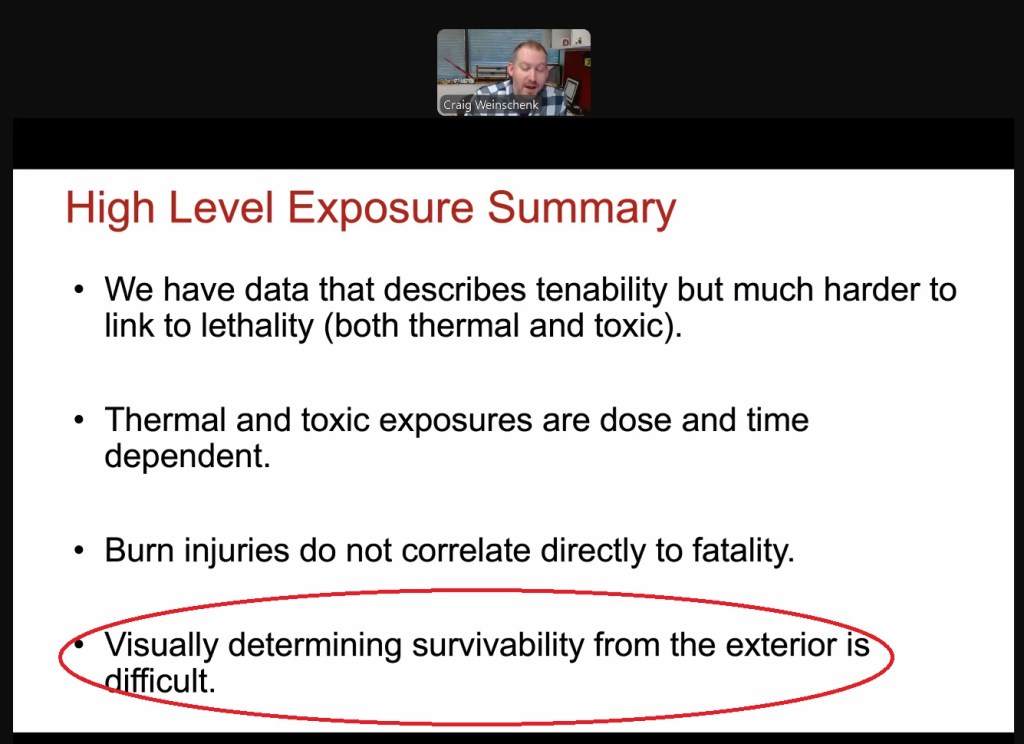
VSP is intended as a decision aid, a framework using observed fireground conditions to rate survivability. But in practice, labeling a space “non-survivable” often happens without visual verification, thermal imaging or any real attempt at entry.
Labeling someone dead from the outside can create emotional distance, letting us avoid search responsibilities and potential guilt. It turns a life‑saving tool into a moral loophole. Dave LeBlanc encapsulated this concern: “Size‑up is about what you can and cannot do. Survivability profiling is about what you will and won’t do.”
Calculated Risk or Ethical Evasion?
Proponents couch VSP in risk management. Critics counter that it can become risk aversion masquerading as strategy, especially when paired with social media-driven, fear‑based narratives like “risk nothing for what’s already lost.” Emotional visuals and anecdotal LODD stories can anchor our thinking, even when they skew reality.
We argue that widely used data sets, including NFPA, USFA, UL FSRI, and the Firefighter Rescue Survey, consistently reinforce the fire service’s mission: search and rescue should not be cancelled simply because conditions appear bad.
But Are Interior Operations Killing Us?
No. Not like some believe.
NFPA’s 2024 fatality report documented 62 on-duty fatalities. Of those:
- Over 40% were due to sudden cardiac events.
- ~15% were vehicle-related.
- Interior fire suppression and search-related activities made up <10%, with zero search-related deaths. This is not even broken down into interior deaths.
Data‑Not‑Drama’s 2025 “Inside Numbers” report (as of mid‑July) recorded 47 on-duty deaths, including only one interior search-related fatality, about 6% of the total.
Exterior operations, medical events and training or vehicle incidents outpace interior LODDs by a wide margin. The perception that searching for victims is inherently lethal doesn’t align with the data.
What Firefighter Rescue Survey Reveals
The Firefighter Rescue Survey provides real rescue data from thousands of civilian survivals. Highlights include:
- A 63.7% overall survival rate for rescued occupants, rising to ≈68% if removed within 6 minutes.
- 57% of rescues were performed by search crews, 24% by attack crews, reflecting that fire attack often includes rescuing victims as part of the operation.
- In zero- or low-visibility conditions, 72% of rescues occurred, with survivors still being found in 47% of zero-visibility and 60% of low-visibility conditions.
- When victims were behind closed doors, survival rates reached 86%, compared to ~62% when the doors were open.
- 83% of rescues happened before knockdown, and 96% before RIT was even activated.
- Bedrooms within 6 feet of an exterior entrance had survival rates up to 82%.
These findings show aggressive, timely interior search—even in poor conditions—commonly yields survivable results.
Rescues That Defy VSP Assumptions
Rescues frequently occur in conditions VSP might label hopeless:
- Children found behind closed doors adjacent to fire rooms.
- Elderly individuals were pulled from smoke-filled corridors.
- People were retrieved during zero visibility while fire attack lines were advancing.
Such outcomes confirm that many survivable occupants reside in spaces that VSP might prematurely rule out. The moral and ethical burden of assuming death, even incorrectly, is significant.
Trading Lives: The Ethical Weight of Assumption
VSP is not neutral, it’s a choice. Choosing not to search based on perceptions becomes a decision to leave someone behind. That decision can carry psychological consequences, especially if post-incident analysis shows survival was possible. Fear-driven risk aversion may protect us in the moment, but at what cost to civilians and our conscience? Data supports decisiveness and ethics demand effort.
A Call for Balanced, Mission‑Driven Action
VSP should aid decision-making, not replace duty:
- Assume survivable spaces exist until conditions are proven unsafe.
- Prioritize early, coordinated search by trained crews.
- Trust well-documented data over emotional anchor narratives.
- Use strategies like closed-door searches and rapid size-up to initiate rescues quickly.
Avoiding risk doesn’t eliminate it; it shifts it onto others.
See ‘Recalculating Risk and Reward: Fireground Probability and Actuality’
Nick Ledin/Fire Engineering
Yes, firefighter safety is essential. But so is serving the public. When we assume a space is unsalvageable without verifying, we risk failing the people we swore to protect. Let the data guide us. Let our training empower us. And let our mission compel us toward action, not assumption.
References
1. Data-Not-Drama.
- “Inside Numbers (Mid-Year 2025)” – Data-Not-Drama, July 17, 2025.
- Summarizes and analyzes current firefighter line-of-duty death (LODD) data. Of the 47 reported on-duty deaths in the first half of 2025, only one involved interior search operations—demonstrating that interior fireground activities remain a low-risk cause of firefighter fatalities.
- Link: https://data-not-drama.com/inside-numbers
- “2024 Report: Interior Deaths” – Data-Not-Drama, January 12, 2025.
- A detailed breakdown of 2024 firefighter LODDs, with emphasis on the true location and context of fatalities. Shows that only about 6% of on-duty deaths occurred during interior operations, with zero directly attributed to primary search activities.
- Link: https://data-not-drama.com/2025/01/12/2024-report-interior-deaths
- “The Rescue Mindset” – by Dave LeBlanc & Shawn Donovan, Data-Not-Drama, June 28, 2021.
- A foundational argument for preserving aggressive interior search as a core fire service mission. Warns against using victim survivability profiling as a moral justification for inaction. Emphasizes values, duty and trust in training.
- Link: https://data-not-drama.com/2021/06/28/the-rescue-mindset
- “Removing Two-In/Two-Out: A Modern, Data-Supported Defense of Our Core Mission” – Data-Not-Drama, May 18, 2024.
- Critically evaluates NFPA 1500’s Two-In/Two-Out requirement through the lens of updated data. Argues that this policy, often misunderstood, can delay necessary rescue actions when misapplied, particularly in initial attack stages.
- Link: https://data-not-drama.com/2024/05/18/removing-two-in-two-out-a-modern-data-supported-defense-of-our-core-mission
2. Firefighter Rescue Survey.
- “Recalculating Risk and Reward: Fireground Probability and Actuality” – by Nick Ledin, Fire Engineering, 2023.
- Analysis of over 2,000 civilian rescues reported by U.S. firefighters. Key findings: 63.7% overall victim survival, 72% of rescues made in zero- or low-visibility conditions, and 83% occurring before fire knockdown. Strongly challenges assumptions behind VSP.
- Link: https://www.fireengineering.com/firefighting/recalculating-risk-and-reward-fireground-probability-and-actuality
- Firefighter Rescue Survey Annual Reports (2021–2024)
- Nationwide crowdsourced rescue data submitted by working firefighters. Demonstrates consistently high victim survival when searches are initiated early—often in seemingly extreme conditions.
- Survey site: https://firefighterrescuesurvey.com
3. NFPA (National Fire Protection Association).
- “Fatal Firefighter Injuries in the United States – 2024” – by Rita Fahy & Richard Campbell, NFPA, released June 2025.
- Provides annual national data on firefighter fatalities, including activity type, location, cause, and contributing factors. Reinforces that medical events and vehicle-related incidents dominate LODDs.
- Link: https://www.nfpa.org/News-and-Research/Data-research-and-tools/Emergency-Responders/Firefighter-fatalities-in-the-United-States
4. USFA (United States Fire Administration).
- “Firefighter Fatalities in the United States – Annual Reports” – USFA/FEMA, 2024 and 2025 editions.
- Official federal tracking of firefighter deaths, categorized by nature of duty, type of fire, incident type, and demographics. Helps cross-validate trends found in NFPA and independent data sources.
- Link: https://www.usfa.fema.gov/statistics/reports/firefighters-departments/firefighter-fatalities
Photo courtesy of Portland Fire & Rescue/Facebook.
 Data Not Drama
One thought on “The Risk of Assumption: Rethinking Victim Survivability Profiling in Firefighting”