
By Bill Carey
19 April 2025
It is sometimes claimed that firefighter deaths and close calls are the result of a defect in our DNA—an idea rooted in discussions and writings about cultural norms of the fire service and individual fire departments. It incorrectly implies that a subjectively bad fire department culture can embed itself into your DNA.
This is biologically incorrect.
The Doolittle Raid. If it had failed, could we blame their DNA?
On 18 April 1942, just months after the attack on Pearl Harbor, 16 B-25B Mitchell bombers launched from the aircraft carrier USS Hornet in a daring mission to strike the Japanese mainland—marking the first American air raid on Tokyo during World War II. Known as the Doolittle Raid, after Lieutenant Colonel James Doolittle who led the operation, this audacious mission was more of a symbolic victory than it was strategic.
Although the physical damage to Japan’s military and industrial targets was relatively minor, the psychological impact was enormous. In the U.S., it restored national morale during a dark period. In Japan, it exposed vulnerabilities on the home front. For the airmen involved, it was a near-suicidal mission: no fighter escorts, limited fuel and no way to return to the carrier.
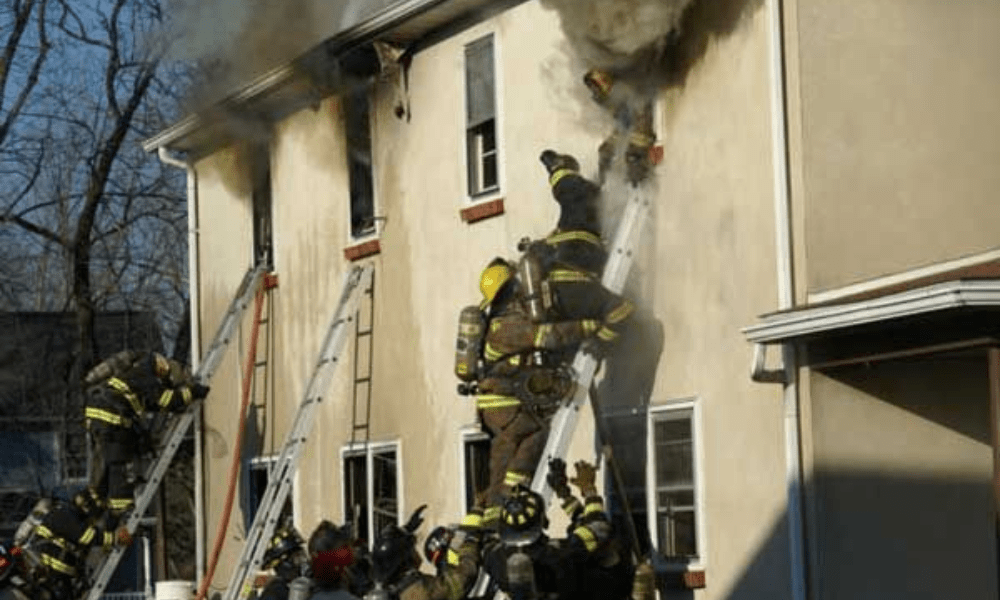
Similarly, firefighters often enter burning buildings not knowing if anyone is inside, risking their lives on the chance that someone might need saving. Both acts reflect a willingness to face extreme danger when the outcome is uncertain.
Despite these risks, the Doolittle Raiders volunteered for the mission knowing they might not return. Their courage and selflessness remain emblematic of heroic action.
What is heroism?
Heroism is commonly defined as voluntary, prosocial behavior that involves risk or sacrifice to benefit others (Franco, Blau, & Zimbardo, 2011). It’s not limited to dramatic rescues or battlefield valor; it also includes moral courage—standing up for what’s right, even in the face of opposition, danger or being socially ostracized.
The nature side: Evolution and biology
Evolutionary science offers intriguing insights into the origins of heroic behavior. One theory is that heroism has roots in inclusive fitness—the idea that individuals are more likely to help those with whom they share genes (Darwin, 1871). This is one reason why altruism among family members may have evolved.
However, people often act heroically for strangers. This broader altruism may be explained by reciprocal altruism, where helping others could lead to favors being returned in the future (Trivers, 1971). In early human societies, individuals who contributed to group survival likely gained social status and protection.
Neuroscience supports this biological inclination toward altruism. Studies have shown that altruistic acts activate brain regions associated with reward and empathy, such as the fronto–mesolimbic network (Moll et al., 2006). The discovery of mirror neurons further suggests that humans are neurologically wired to resonate with the emotions of others (Iacoboni, 2008).
Can culture be part of our DNA?
A question often arises: Can cultural traits be added to our DNA? The short answer is no—culture is a learned system of behaviors, beliefs, and values. It is not something that is genetically inherited like eye color or blood type. DNA is the biological blueprint for an individual’s physical and behavioral traits, but it does not encode specific cultural practices.
That said, there is a fascinating relationship between genes and culture, often referred to as gene-culture co-evolution. Genes can influence an individual’s predisposition to certain behaviors, such as openness to experience or risk-taking, which may affect how likely they are to adopt certain cultural traits (de Waal, 2009; Batson, 1991). Conversely, cultural practices can shape the expression of genes. For example, long-term dietary practices within a culture can lead to genetic adaptations, such as lactose tolerance in populations with a history of dairy consumption (Zimbardo, 2007; Staub, 2015).
In the context of heroism, while no specific gene makes someone a hero, genetic predispositions can affect traits like empathy, emotional regulation, and social bonding—all of which play a role in heroic behavior.
The nurture side: Environment and social learning
Despite our biological wiring, heroism is not guaranteed. Social and psychological factors play a crucial role in determining whether someone will act heroically. Moral development theories emphasize the influence of upbringing, education, and societal norms (Batson, 1991).
Psychologist Ervin Staub (2015) argues that people learn to be heroic through experience, particularly when they witness or endure suffering. Empathy, moral courage, and a sense of responsibility can be cultivated over time, especially through exposure to positive role models and value-driven education.
Philip Zimbardo’s Heroic Imagination Project emphasizes that heroism is not the exclusive domain of exceptional people. Instead, with the right mindset, training and social support, anyone can act heroically (Heroic Imagination Project, n.d.). This challenges the “hero myth” and reframes heroism as a potential within us all.
The bystander effect and moral action
Classic experiments on the bystander effect show how context can suppress heroic impulses. When people believe someone else will help, they’re less likely to act themselves. However, when individuals feel personal responsibility, their chances of stepping in increase dramatically (Zimbardo, 2007).
This highlights the importance of situational awareness and preparedness. Training people to anticipate moral decisions—what Zimbardo calls “heroic imagination”—can increase the likelihood of prosocial action (Franco et al., 2011).
Is culture in our DNA?
Culture, though not encoded in our genes, interacts with biology in complex ways, shaping and being shaped by human behavior over generations. Our DNA may give us the tools, but it’s our choices, environments, and courage that determine whether we use them. Culture, by contrast, is not inherited biologically. Instead, it is learned through social interaction, observation, and imitation within a community. Cultural traits—such as language, customs, and beliefs—are passed down from generation to generation through education, storytelling, and shared social experiences.
References
Batson, C. D. (1991). The altruism question: Toward a social psychological answer. Lawrence Erlbaum Associates.
Darwin, C. (1871). The descent of man, and selection in relation to sex. John Murray.
de Waal, F. (2009). The age of empathy: Nature’s lessons for a kinder society. Harmony Books.
Franco, Z. E., Blau, K., & Zimbardo, P. G. (2011). Heroism: A conceptual analysis and differentiation between heroic action and altruism. Review of General Psychology, 15(2), 99–113. https://doi.org/10.1037/a0022672
Heroic Imagination Project. (n.d.). Home. https://www.heroicimagination.org
Iacoboni, M. (2008). Mirroring people: The science of empathy and how we connect with others. Farrar, Straus and Giroux.
Moll, J., Krueger, F., Zahn, R., Pardini, M., de Oliveira-Souza, R., & Grafman, J. (2006). Human fronto–mesolimbic networks guide decisions about charitable donation. Proceedings of the National Academy of Sciences, 103(42), 15623–15628. https://doi.org/10.1073/pnas.0604475103
Staub, E. (2015). The roots of goodness and resistance to evil: Inclusive caring, moral courage, altruism born of suffering, active bystandership, and heroism. Oxford University Press. https://doi.org/10.1093/acprof:oso/9780199355584.001.0001
Trivers, R. L. (1971). The evolution of reciprocal altruism. The Quarterly Review of Biology, 46(1), 35–57. https://doi.org/10.1086/406755
Zimbardo, P. G. (2007). The Lucifer effect: Understanding how good people turn evil. Random House.
Lead photograph courtesy of U.S. Navy.
The author’s writings and related social media posts are his own and are not the position and/or opinions of current and former employers.
 Data Not Drama