
By Bill Carey
12 July 2023
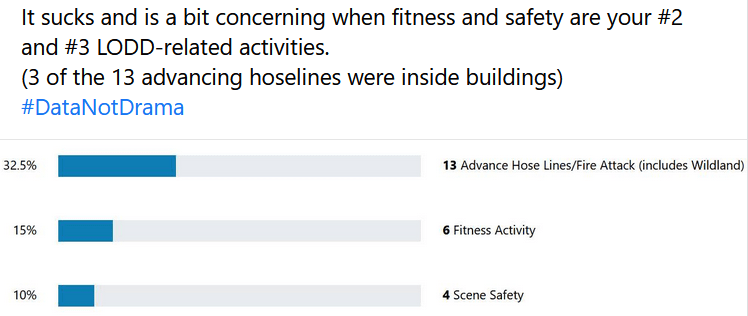
A look at our fatalities slightly halfway through the year showed an interesting look at what are the top three activity types the fallen were involved in at the time of their deaths. A Facebook post on 7 July of the three led to some questions.
Fitness
Six firefighters died participating in what the USFA listed as Fitness Activity. All died non-traumatic deaths but the data is muddy.
Gresham, OR. Cardiac arrest after collapsing after doing hose evolutions at training center
Lake Mills, WI. Heart attack at a gym the day after attending live fire training
Bartow County, GA. Fell unresponsive inside search maze in March
Oak City, NC. Heart attack at home after training
Bayville, NJ. Heart attack after work a day after training
Frederick County, VA. Collapsed during physical fitness training
We can see that two of the victims were participating in fitness training. The USFA has Training listed as a Duty Type, therefore consider that any type of physical training can be listed under the Activity Type, Fitness Activity.
Safety
Scene Safety is third. Four firefighters are listed under this Activity Type.
Middleport, OH. Thrown out of fire apparatus during a rollover on 2022. Remained in hospital until his death.
Maui County, HI. Swept into a storm drain by flood waters while assisting public safety employees.
Abbott, TX. Fell and struck by fire apparatus while doing traffic control for a stranded vehicle.
Ancram, NY. Suffered a medical emergency while doing traffic control.
Like Fitness, you can see it is a widely interpreted category.
The lesser of them all, at this date, are the interior fatalities. Heart attacks and vehicle-related deaths are the leaders. It is ironic, the ranking and a reminder about the vagueness of our fatality data in a time when there is a lot of talk about fire service “data.”
Image courtesy of Skylar Jordan Whitehead/YouTube.
 Data Not Drama