By Bill Carey
15 September 2026
Firefighters bring experiences, professional identities, opinions, and assumptions to what they see on social media. Those beliefs can shape how they interpret information and what they seek out, accept, share, and remember. Sometimes they will toss out emotional comments or a vague number – if any number at all – about line-of-duty deaths (LODDs) as the basis of their position.
People naturally pair their views with information that supports their beliefs. They pay less attention to information that challenges them. This can reduce the discomfort of conflicting information.
In the fire service, this is important when social media discussions involve controversial or emotionally charged subjects such as:
- interior attack
- transitional attack
- lightweight construction
- tactical ventilation
- risk management
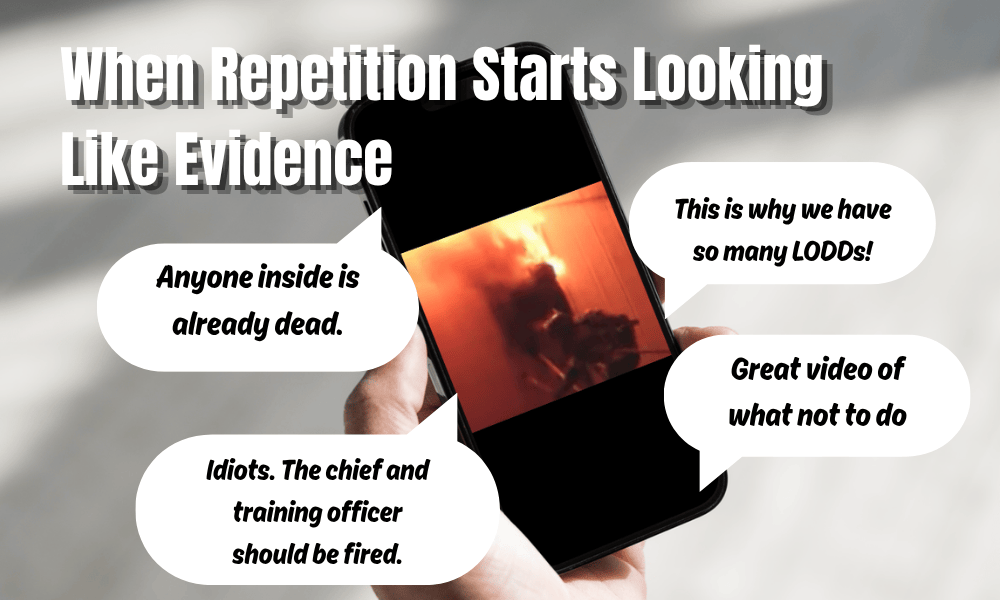
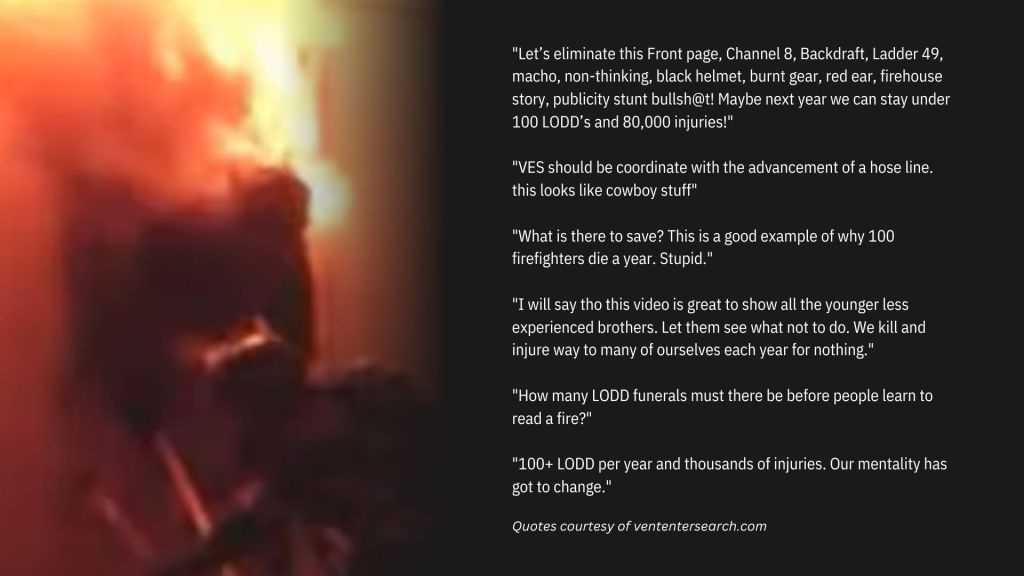
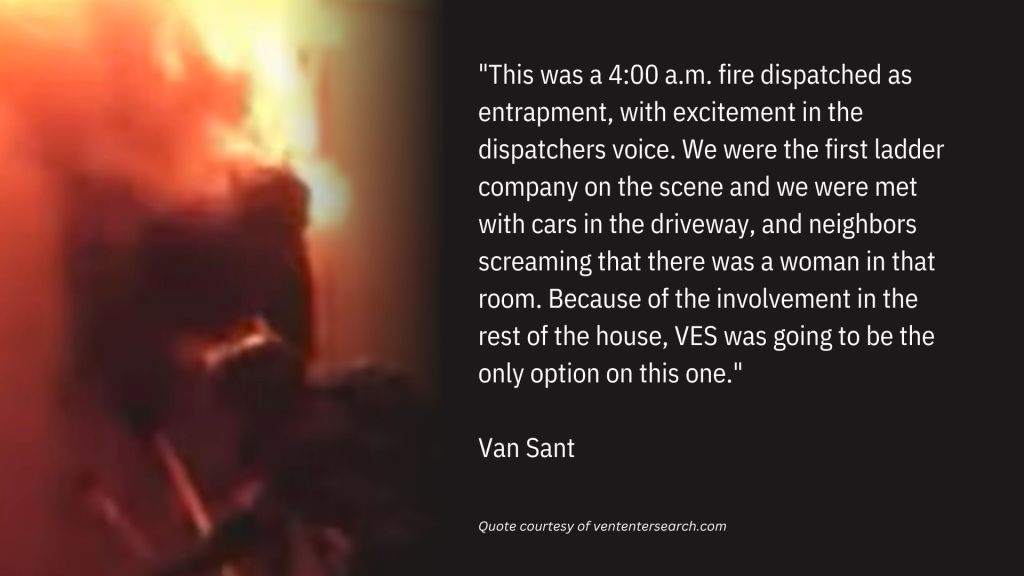
Consider a firefighter who believes that vent-enter-search (VES) is unnecessarily dangerous. That firefighter may be more likely to notice, watch, comment on, and share content showing a firefighter bailing out of a window with fire overhead. That image or video may become evidence supporting the belief that the tactic itself is excessively dangerous.
Another firefighter who strongly believes that VES remains essential may interpret the same content differently. The image may be viewed as evidence of competence, effective training and appropriate risk-taking.
The photograph interpretations differ. The same visual information can support competing beliefs depending on the observer’s existing cognitive framework.
From confirmation bias to selective exposure
Confirmation bias becomes particularly powerful when it influences what people choose to consume.
Research on selective exposure suggests that people often gravitate toward information that reinforces their existing attitudes. Garrett (2009) found that opinion-reinforcing information increased the likelihood of exposure to online news, while opinion-challenging information was less likely to attract attention. Selective exposure does not require a person to deliberately reject opposing information. Spending more time with confirming information can gradually change the composition of the information environment.
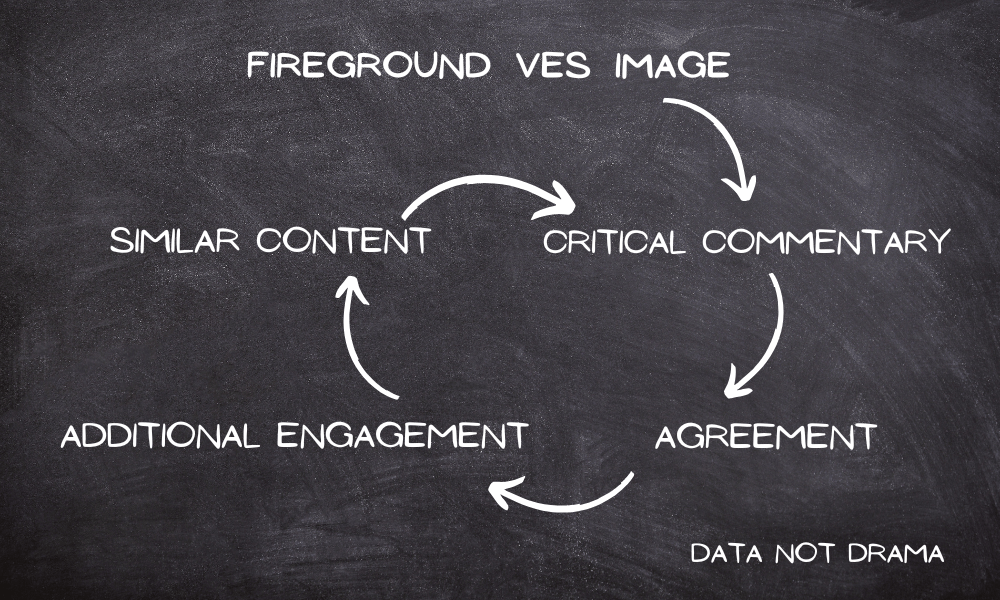
A firefighter who follows accounts that consistently criticize vent-enter-search may gradually construct a feed like this:
A firefighter who follows accounts emphasizing the use of vent-enter-search may experience a different sequence:
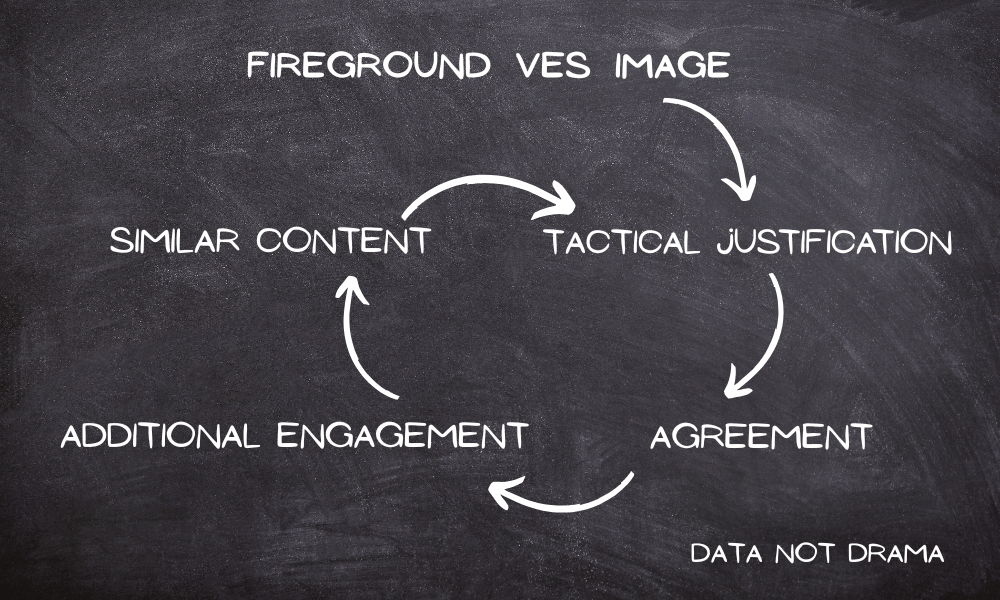
Neither believes that they are constructing an information bubble. Instead, they believe they are following people who know what they’re talking about. However, over time, the information they encounter can become increasingly consistent with their existing worldview.
The algorithm becomes part of the feedback
Modern platforms use a variety of signals to determine which content is likely to be relevant or engaging to an individual user. A user’s viewing behavior can influence the content subsequently presented.
Research on social media personalization identifies this interaction between human behavior and algorithmic curation as an important component. Users influence what they see through their behavior, while the platform influences what they encounter through personalization and ranking. The result is a feedback system involving both.
In the two VES examples, each conclusion may feel empirically supported because the firefighters have seen the evidence repeatedly. Frequency in a social media feed is not the same thing as frequency in the real world.
If a firefighter’s social media feed contains numerous posts and comments criticizing a particular tactic, it can become easy to conclude that “everyone” in the fire service agrees. The individual is not necessarily seeing a representative sample of firefighters but a network shaped by their own connections, interests, interactions, and platform curation.
| More: Availability Heuristic, Social Media and Firefighter Perception of Risk

